
Public Transportation Overview
France possesses one of the most developed public transportation networks in Europe, managed through a combination of national rail services and local municipal authorities. For foreign nationals, the system is divided into long-distance travel and urban transit networks.
National and Regional Rail
The national state-owned railway operator is SNCF (Société Nationale des Chemins de Fer Français). The network consists of several categories of trains:
- TGV (Train à Grande Vitesse): High-speed trains connecting major cities such as Paris, Lyon, Bordeaux, and Marseille.
- TER (Transport Express Régional): Regional trains serving smaller towns and rural areas within specific administrative regions.
- Intercités: Medium-distance trains that serve routes not covered by high-speed lines.
Urban Transit Systems
Major French cities utilize integrated networks of metros, trams, and buses. In Paris and the Île-de-France region, the network is managed by RATP. Navigation and ticketing often utilize contactless smart cards.
The Navigo Month Pass (for all zones in Paris) is priced at approximately 86.40 EUR ($90.72 USD, Jan 2026). For travelers and occasional users, a single ticket (Ticket t+) costs approximately 2.15 EUR ($2.26 USD, Jan 2026).
Discount Cards
Foreign residents can reduce travel costs by purchasing a "Carte Avantage" from SNCF for approximately 49.00 EUR ($51.45 USD, Jan 2026). This card provides a 30% discount on most long-distance fares and is valid for one year. Eligibility depends on age (Jeune, Adulte, or Senior).

Driving in France
Driving regulations in France are strict, particularly regarding speed limits, alcohol consumption, and documentation. All vehicles must carry a reflective safety vest and a warning triangle at all times.
Driver's License Validity
The requirements for driving in France depend on the origin of your license and your residency status:
- EU/EEA Licenses: Valid indefinitely in France as long as the license remains valid in the issuing country and the holder is of legal driving age.
- Non-EU Licenses (Short Stay): Valid for up to one year if accompanied by an International Driving Permit (IDP) or a certified French translation.
- Non-EU Licenses (Long Stay): Residents must generally exchange their foreign license for a French permis de conduire within the first year of residency.
Exchanging a Foreign License
The exchange process is handled online via the ANTS (Agence Nationale des Titres Sécurisés) platform. Exchange is only possible if France has a reciprocal agreement with the issuing country or state. If no agreement exists, the individual must pass the French driving exam (code and practical test).
The administrative cost for a license exchange varies by region but is often free, though a regional tax may apply in specific cases. In most instances, the cost is 0.00 EUR ($0.00 USD, Jan 2026), excluding the cost of certified translations.
Vehicle Insurance and Registration
Third-party liability insurance (assurance au tiers) is mandatory. Registration of a vehicle (Certificat d'Immatriculation or Carte Grise) must be updated within 30 days of a change of address or vehicle ownership. The cost of the Carte Grise depends on the vehicle's horsepower and CO2 emissions.
Environmental Regulations and Zones
France has implemented several measures to reduce urban pollution, which impact both residents and visitors driving within specific city centers.
Crit'Air Stickers
Many French cities, including Paris, Lyon, and Grenoble, are designated as ZFE (Zones à Faibles Émissions) or Low Emission Zones. To enter these zones, vehicles must display a "Crit'Air" vignette (windshield sticker) that classifies the vehicle based on its emission levels.
The sticker can be ordered online through the official government portal. The cost for a vehicle registered in France is 3.77 EUR ($3.96 USD, Jan 2026), including postage. Driving in a restricted zone without a sticker or with an unauthorized sticker can result in a fine of 68.00 EUR ($71.40 USD, Jan 2026).
Parking and Tolls
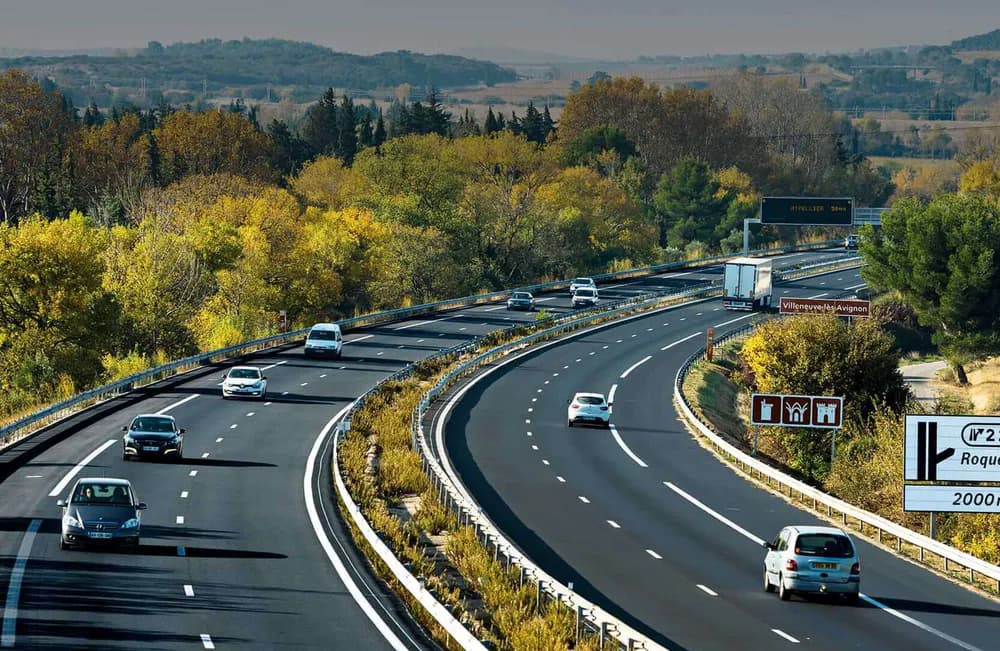
Motorways (Autoroutes) in France are generally managed by private companies and require the payment of tolls (péages). Costs vary significantly by distance. Parking in urban centers is predominantly paid, managed via mobile apps like PayByPhone or Flowbird. In Paris, street parking rates can reach 6.00 EUR ($6.30 USD, Jan 2026) per hour in central districts.