
Overview of the French Mobile Market
The French telecommunications landscape is highly competitive, characterized by high data allowances and relatively low costs compared to other Western European nations. As of 2025/2026, the market is dominated by four major network operators that own their own infrastructure, alongside several Mobile Virtual Network Operators (MVNOs) that lease network capacity.
The four primary operators are:
- Orange: The state-backed incumbent, often cited for the widest coverage and highest service quality.
- SFR: A major provider offering a wide range of bundled services (internet and mobile).
- Bouygues Telecom: Known for competitive pricing and a robust 5G network in urban areas.
- Free Mobile: Credited with disrupting the market with low-cost, high-data "no-commitment" plans.
In addition to these, low-cost subsidiaries such as Sosh (Orange), RED (SFR), and B&You (Bouygues) offer digital-only services without physical storefronts, which are popular among residents seeking budget-friendly options.
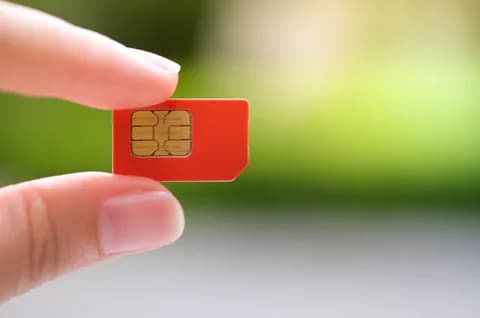
Types of Mobile Plans
Foreign nationals in France generally choose between three main categories of mobile service. The choice depends on the duration of stay and the availability of a local bank account.
Prepaid SIM Cards (Cartes Prépayées)
Prepaid cards require no contract and no French bank account. They can be purchased at supermarkets, "Tabacs" (tobacco shops), or operator boutiques. While convenient for short-term visitors, the cost per gigabyte of data is significantly higher than monthly plans. A basic starter kit typically costs around 10 EUR ($11 USD, Jan 2026).
No-Commitment Contracts (Forfaits Sans Engagement)
This is the most common choice for expatriates. These plans are billed monthly but can be cancelled at any time without penalty. They are almost exclusively managed online. Prices for a standard plan with 50GB–100GB of data typically range from 10 EUR to 20 EUR ($11 USD to $22 USD, Jan 2026).
Fixed-Term Contracts (Forfaits Avec Engagement)
These contracts usually last 12 or 24 months and often include a subsidized smartphone. While the initial cost of the phone is lower, the monthly subscription fee is significantly higher, often ranging from 30 EUR to 60 EUR ($33 USD to $66 USD, Jan 2026). Early termination usually results in substantial fees.

Requirements for Subscription
To sign up for a monthly plan (postpaid), French law and operator policies typically require specific documentation. Without these, foreigners are generally restricted to prepaid options.
- Proof of Identity: A valid passport or EU ID card. Some operators may not accept non-EU driving licenses as primary ID.
- Proof of Address (Justificatif de domicile): An electricity bill (EDF), water bill, or a rental lease dated within the last three months.
- French Bank Account: You will need a Relevé d'Identité Bancaire (RIB). Most French operators require a French or SEPA-zone IBAN for automated monthly withdrawals (Prélèvement automatique).
- Email Address: For digital billing and account management.
Note: For those without a French bank account, some MVNOs (like Lebara or LycaMobile) offer monthly "renewing" bundles that can be paid via international credit cards, bridging the gap between prepaid and traditional contracts.
Practical Steps and Activation
The process of obtaining a SIM card has become increasingly digitized. Most residents order their SIM cards online, and they are delivered via post within 3 to 5 business days.
eSIM Availability
Most major French operators now offer eSIMs. This allows for near-instant activation if your device is compatible. During the online signup process, you can select "eSIM" instead of a physical card, which usually costs the same activation fee, typically around 10 EUR ($11 USD, Jan 2026).
Keeping Your Number (The RIO Code)
If you are already in France and wish to switch operators, you can keep your French mobile number for free. You must obtain your RIO (Relevé d'Identité Opérateur) by dialing 3179 from your current mobile line. Provide this code to your new provider, and they will handle the cancellation of your old contract and the transfer of your number.
Regulatory Oversight
The telecommunications sector is regulated by ARCEP (Autorité de régulation des communications électroniques, des postes et de la distribution de la presse). For disputes with operators that cannot be resolved through customer service, consumers can contact the Médiateur des communications électroniques.